Sand Mound in the Yard: Why Some Berks County Homes Have One and Others Don’t
Drive around Berks County and you’ll spot raised, grassy mounds in some yards and nothing but flat lawn in others — even on similar-looking properties nearby. The difference almost always comes down to what’s underneath, not personal preference.
The Simple Explanation, and the Real One
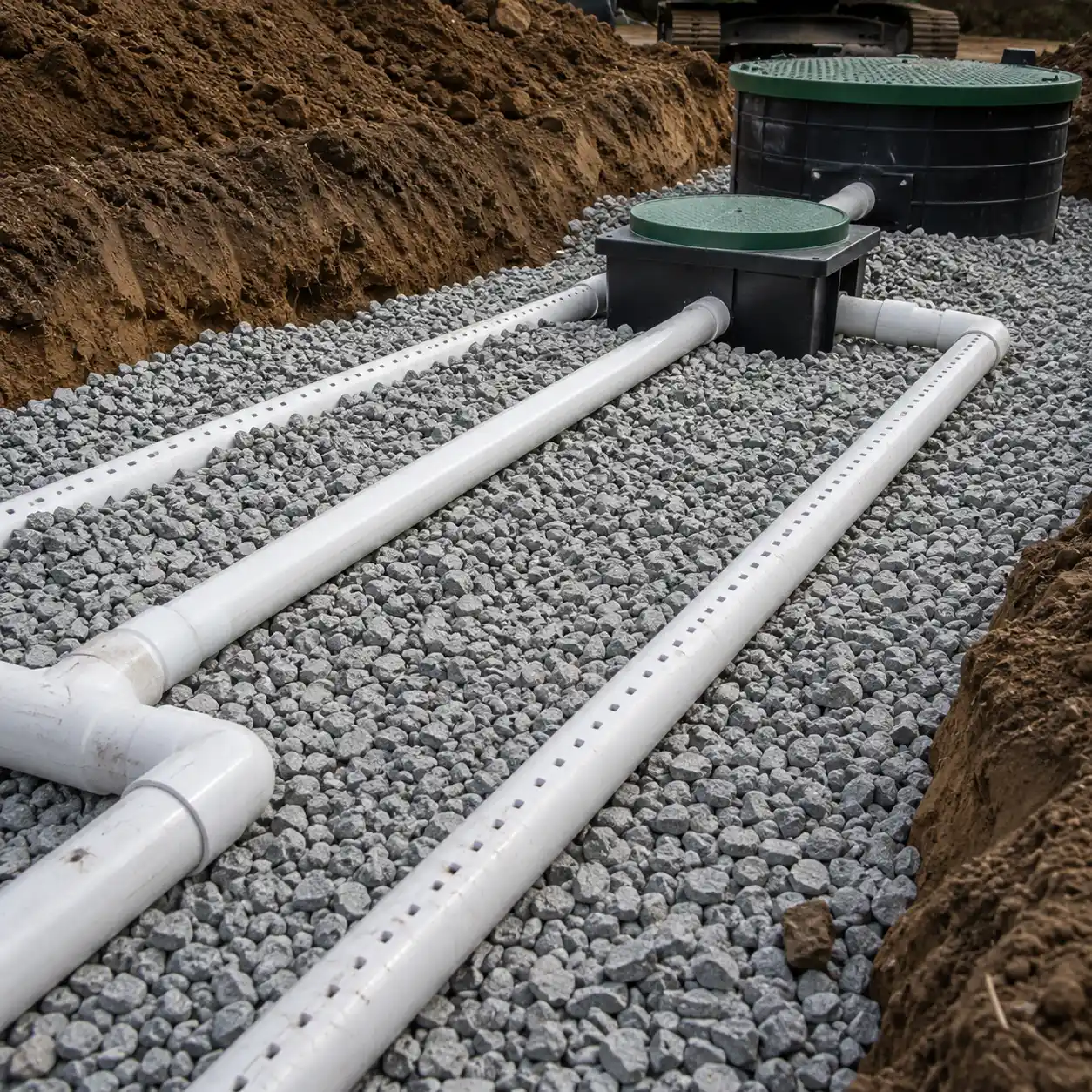
The simple version is that a sand mound is a type of septic system built above ground instead of buried in trenches. That’s accurate, but it doesn’t explain why one property gets a standard buried field and the neighboring lot needs a mound instead — and the answer isn’t about cost-cutting or preference. It’s a direct response to what a soil evaluation finds underground.
A conventional drain field relies on natural, undisturbed soil to filter effluent as it moves downward. That only works if there’s enough usable soil depth before hitting bedrock or groundwater. When there isn’t, a mound solves the problem by building the necessary depth upward instead of relying on what’s naturally there.
Soil Conditions and What They Typically Lead To
This is a general guide based on common outcomes — every lot still requires its own individual soil evaluation.
Actual determination always comes from a site-specific soil probe and percolation test — this table reflects general tendencies, not a substitute for that testing.
Planning new construction or a replacement?
We’ll evaluate your soil before recommending a system type.
Schedule a Soil Evaluation
Serving Reading and all of Greater Reading.
Why This Shows Up So Often in Berks County
Central and western Berks County sit on limestone bedrock, which creates the karst conditions that reduce usable soil depth on a meaningful share of local lots — bedrock can sit closer to the surface than it would in a region with deeper, more uniform soil. Properties closer to creeks or the Schuylkill River deal with a related but separate issue: a high water table that similarly shrinks the buffer a conventional field needs to work properly.
That combination is why sand mounds are a genuinely common sight across the county rather than an unusual exception, and why two lots that look nearly identical on the surface can end up with completely different system types once the soil evaluation comes back.
Living With a Sand Mound
Day-to-day maintenance isn’t dramatically different from a conventional system — regular pumping still matters, and the same rules about what not to flush and how to treat the ground above the field still apply. The mound itself should be planted with grass, never trees or deep-rooted shrubs, and it shouldn’t be driven over or used for storage, same as any drain field.
One thing worth knowing: because a sand mound relies on a pump to dose effluent at controlled intervals rather than relying purely on gravity, there’s a mechanical component involved that a conventional system doesn’t have. That’s a reasonable thing to have checked as part of routine service, alongside the usual pumping and inspection.
Find Out What Your Lot Needs
Tell us about your property and whether this is new construction or a replacement, and we’ll follow up to schedule a soil evaluation.
- Soil probe and percolation testing
- System design matched to your lot
- Sand mound and pressure-dosed experience
- Permitting support with your township
- Serving all of Greater Reading
Tell Us About Your Needs
We’ll reach out to confirm your appointment details.