What Happens During a Septic Pumping Visit (And How to Prepare)
If you’ve never had your tank pumped before, or just don’t remember the last time, here’s what the visit actually looks like from start to finish — and what you can do beforehand to make it go faster.
Why It Helps to Know What’s Coming
The common assumption is that pumping is quick and simple — a truck shows up, hooks up a hose, and leaves. That’s roughly true once things are underway, but it skips a few steps that matter, especially the first time or on a property where the tank’s location isn’t already known and marked.
Knowing what to expect means less standing around wondering what’s happening, and a little preparation on your end can genuinely shorten the visit.
Step 1: Confirming Details Before the Visit
Before the appointment, we confirm your address and any access notes that matter — gate codes, dogs to be aware of, where to park, and whether you know the tank’s approximate location. If you’ve never had it serviced or don’t have that information, that’s fine; it just means the visit starts with locating the tank rather than going straight to pumping.
Step 2: Locating and Uncovering the Tank
If the access point isn’t already marked or visible, this is where probing rods come in — used carefully, especially on Berks County’s karst-prone ground where bedrock depth can vary more than expected. Once located, the lid gets uncovered, which sometimes means removing sod, mulch, or plantings directly over the access point.
If you already know where your access lid is and it’s easily reachable, this step is quick — and if you’re able to expose it yourself ahead of time (checking with us first about depth and method), that can shave real time off the visit.
Step 3: Measuring Sludge and Scum Before Pumping
Once the tank is open, we measure the sludge layer at the bottom and the scum layer at the top before doing anything else. This confirms pumping is actually warranted — if a tank was recently serviced or genuinely isn’t due yet, we’ll tell you that rather than pumping it anyway. It’s a quick step, but an important one for making sure you’re only paying for work that’s actually needed.
Step 4: The Actual Pump-Out
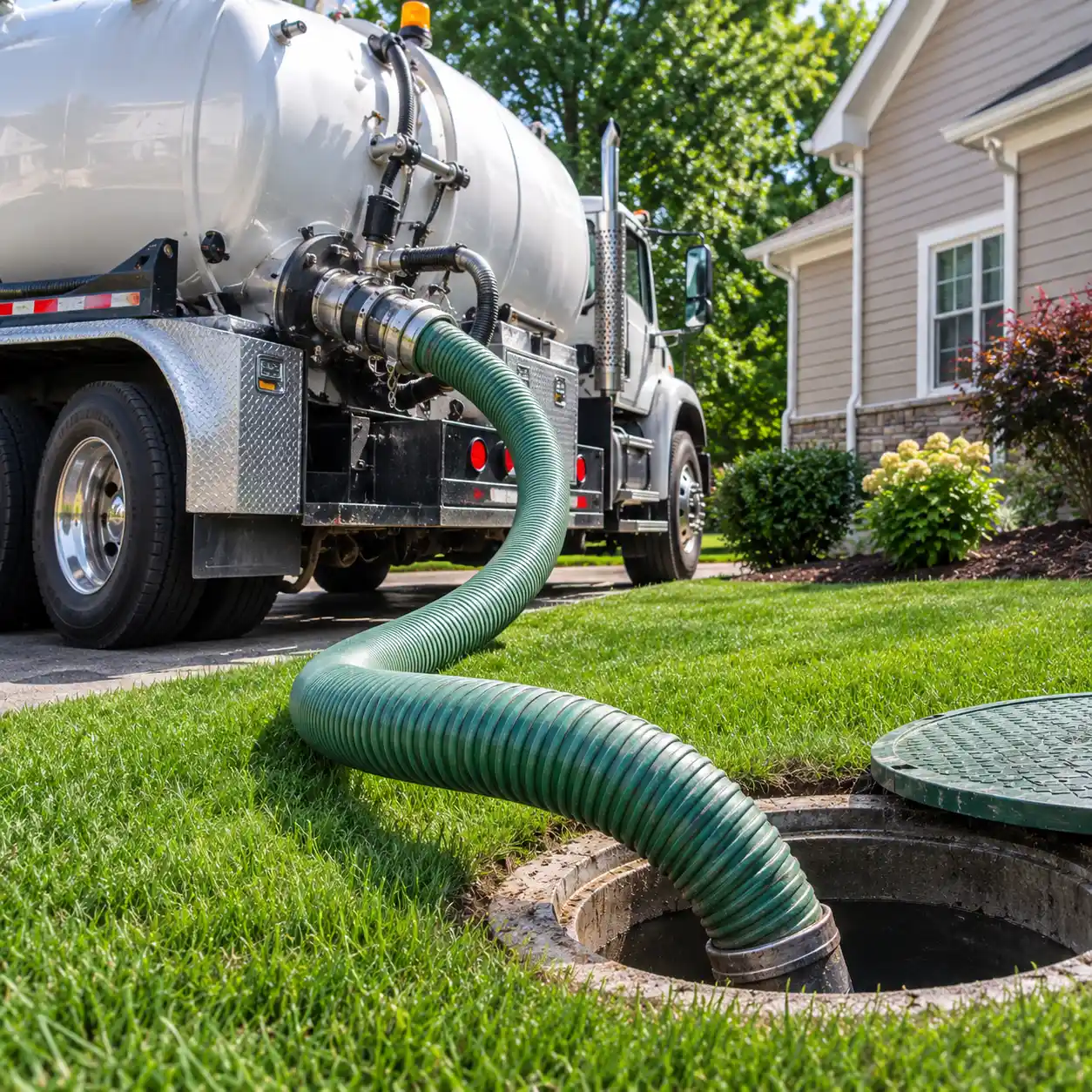
This is the part most people picture — a hose from the truck vacuums out the tank’s contents, typically taking 30 to 60 minutes once everything is accessible. There’s some noise from the truck’s pump running, but it’s not disruptive to anything happening inside the house, and you don’t need to avoid using water during this step unless we specifically ask you to.
Step 5: A Quick Condition Check
With the tank empty, it’s the easiest time to spot problems that solids and liquid would otherwise hide — a cracked baffle, early signs of root intrusion, or any structural concern. This isn’t a full inspection, but anything notable gets flagged and documented so you know about it, even if it doesn’t need immediate action.
Step 6: Resealing and Wrapping Up
The access lid gets properly resealed and the area backfilled, restoring the yard as close to its original condition as reasonably possible. You’ll get written notes on what was found — sludge and scum levels, any condition issues, and a recommendation for your next pumping interval based on what we saw.
Overdue for a pumping visit?
We’ll handle the whole process, start to finish.
Schedule Your Pumping Visit
Serving Reading and all of Greater Reading.
How to Prepare, If You Want To
None of this is required, but a few small things can make the visit smoother. If you know roughly where the tank is, clear away anything on top of it — patio furniture, potted plants, a stack of firewood — so it’s not in the way. Make sure any gates are unlocked or that we have a code, and let us know about pets that should be kept inside during the visit.
If you don’t know where the tank is, don’t worry about any of this — that’s exactly the kind of thing we handle as part of the visit, and it’s a routine part of the job on older properties throughout Berks County.
What Comes Next
Once you have a documented pumping date and a recommended interval, hold onto that information — it’s useful for scheduling your next visit, and genuinely valuable if you ever sell the property, since a buyer’s inspector will ask exactly the kind of questions your own records can now answer.
Schedule Your Pumping Visit
Tell us your address and roughly how long it’s been since your last pump-out, and we’ll follow up to schedule.
- Tank locating included if needed
- Sludge and scum measurement
- Full pump-out for any tank size
- Written condition notes after every visit
- Serving all of Greater Reading
Tell Us About Your Needs
We’ll reach out to confirm your appointment details.